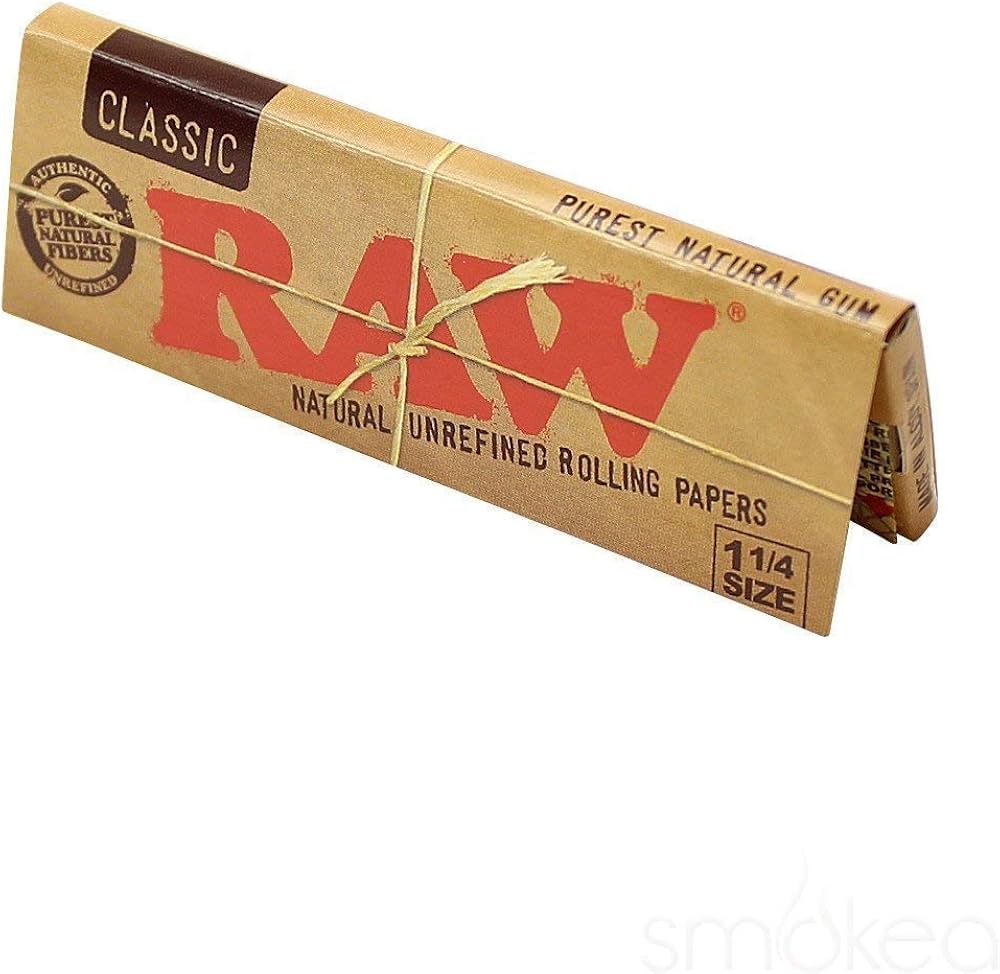
Whether you are brand new to hand-rolling or you have been rolling for years and want to deepen your knowledge, understanding rolling papers is essential. The paper you choose affects everything from how easy it is to roll, how evenly it burns, and how much flavor comes through. With dozens of brands, multiple materials, and five common sizes on the market, making the right choice can feel overwhelming.
This guide covers everything you need to know about rolling papers. We will walk through the history behind them, break down every standard size with exact dimensions, compare the major materials and how each one performs, review the top five brands side by side, teach you the fundamentals of rolling step by step, and recommend the accessories that make the process easier and more enjoyable.
What Are Rolling Papers? A Brief History
Rolling papers are thin, lightweight sheets designed specifically for hand-rolling tobacco and herbal blends. They consist of a rectangular sheet of material with a strip of adhesive gum along one edge that seals the roll when moistened. The concept is simple, but the engineering behind modern rolling papers involves careful attention to thickness, porosity, burn rate, and material composition.
The history of rolling papers stretches back centuries. The practice of rolling tobacco in paper originated in Spain during the 17th century, where beggars in Seville would collect discarded cigar butts, shred the remaining tobacco, and wrap it in small pieces of newspaper or scrap paper. By the early 1700s, dedicated rolling paper manufacturing had begun in Alcoy, Spain, a town that became the rolling paper capital of the world. The Pay-Pay brand, established in 1703, is widely considered one of the earliest commercial rolling paper producers.
From Spain, the practice spread across Europe and eventually worldwide. France became another major hub of rolling paper production, giving rise to brands like Zig-Zag (founded in 1879) and OCB (founded in 1918). In the 20th century, the market expanded with new materials like rice and hemp replacing traditional wood pulp, and brands like RAW (founded in 1995 by Josh Kesselman) helped popularize unbleached, additive-free papers that appeal to health-conscious consumers. Today, rolling papers are a global industry with options to suit every preference and skill level.
Rolling Paper Sizes Explained
Choosing the right paper size is one of the most important decisions you will make as a roller. Each size is suited to different situations, preferences, and skill levels. Here is a complete breakdown of the five standard rolling paper sizes, including their typical dimensions and ideal use cases.
Single Wide
Single wide papers are the smallest standard rolling paper size. They typically measure approximately 68 to 70mm in length and 34 to 36mm in width. These compact papers produce a slim, cigarette-sized roll that is well suited for solo sessions or for users who prefer a conservative amount of material. Single wide papers require a bit more precision to roll because the smaller surface area leaves less room for error, but they are excellent for experienced rollers who want a tight, efficient roll with minimal paper.
- Typical dimensions: 68-70mm x 34-36mm
- Best for: Solo sessions, experienced rollers, conservative use
- Difficulty: Moderate to advanced
1 1/4 (One and a Quarter)
The 1 1/4 size is the most popular rolling paper size worldwide, and for good reason. These papers measure approximately 76 to 78mm in length and 45 to 48mm in width, giving you about 25 percent more rolling surface than a single wide. The extra width makes them significantly easier to roll while still producing a reasonably sized finished product. If you are new to rolling or just want a reliable everyday size, 1 1/4 papers are the standard recommendation. Nearly every brand produces papers in this size, so your selection options are the broadest here.
- Typical dimensions: 76-78mm x 45-48mm
- Best for: Everyday use, beginners and experienced rollers alike
- Difficulty: Easy to moderate
1 1/2 (One and a Half)
The 1 1/2 size shares approximately the same length as the 1 1/4 at about 76 to 78mm, but it is wider at roughly 60 to 62mm. This extra width allows you to roll a fatter, more generous cylinder without increasing the overall length. The 1 1/2 size is a good middle ground for people who find 1 1/4 papers a bit too small but do not want to jump all the way up to king size. It is less commonly stocked than 1 1/4 or king size, so availability may vary depending on the brand.
- Typical dimensions: 76-78mm x 60-62mm
- Best for: Users who want a fuller roll without king size length
- Difficulty: Easy to moderate
King Size
King size papers are the longest standard size, measuring approximately 100 to 110mm in length and 55 to 60mm in width. The additional length means more material capacity and a longer-lasting session, making king size papers the go-to choice for sharing or for anyone who prefers a substantial roll. The wider dimensions also make king size papers quite forgiving to roll with, since you have more surface area to work with and more room to distribute your material evenly.
- Typical dimensions: 100-110mm x 55-60mm
- Best for: Sharing, longer sessions, generous rolls
- Difficulty: Easy
King Size Slim
King size slim papers retain the full length of a standard king size at approximately 100 to 110mm, but reduce the width to around 42 to 45mm. This slimmer profile produces a roll that is long but lean, giving you the extended session time of a king size without the bulky diameter. Many experienced rollers consider king size slim to be the ideal format because the narrower width means less excess paper, which translates to a cleaner taste and a more refined smoking experience. This size has become extremely popular in Europe and is rapidly gaining traction in the United States.
- Typical dimensions: 100-110mm x 42-45mm
- Best for: Experienced rollers who want length without excess paper
- Difficulty: Moderate
Choosing Your Size: A Quick Rule of Thumb
If you are just starting out, go with 1 1/4 papers. They offer the best balance of ease and versatility. Once you are comfortable with the rolling motion, try king size slim for a longer, more refined experience. Save single wide for when you want maximum efficiency, and reach for standard king size when you are rolling for a group.
Rolling Paper Materials: How They Affect Your Experience
The material your rolling paper is made from has a direct impact on how it handles, how it burns, and how much flavor it adds (or does not add) to your session. There are four primary materials used in modern rolling papers, each with distinct characteristics.
Rice Papers
Rice papers are made from processed rice starch and are among the thinnest and most transparent rolling papers available. They burn very slowly and produce virtually no ash, which means you get the longest possible session from a single roll. Because they are so thin, rice papers add almost no taste whatsoever, making them the preferred choice for purists who want to taste nothing but their material. The downside is that rice papers can be challenging to work with. Their smooth, slippery texture makes them harder to grip and manipulate, and they are sensitive to humidity, becoming overly sticky or fragile in damp conditions.
- Thickness: Ultra-thin
- Burn rate: Very slow
- Flavor impact: Essentially none
- Rollability: Challenging, best for experienced rollers
Hemp Papers
Hemp rolling papers are made from natural hemp plant fibers and have surged in popularity over the past decade. They offer a slightly textured surface that provides excellent grip, making them much easier to roll with than rice papers. Hemp papers burn at a moderate, even rate and produce a light, fine ash. They have a very subtle earthy flavor that most users either enjoy or do not notice at all. Hemp papers are widely considered the best all-around material because they balance ease of use, burn quality, and taste neutrality effectively. They are also a more sustainable and eco-friendly option compared to wood pulp.
- Thickness: Thin to medium
- Burn rate: Moderate and even
- Flavor impact: Very slight earthy note
- Rollability: Excellent, suitable for all skill levels
Wood Pulp Papers
Wood pulp is the original rolling paper material and remains the most common option found in convenience stores and gas stations. These papers are thicker, sturdier, and more rigid than hemp or rice alternatives, which makes them the easiest material to roll with by a significant margin. If you have never rolled before, wood pulp papers are forgiving of sloppy technique and hold their shape well during the rolling process. The trade-off is that wood pulp papers burn faster than other materials and tend to produce more ash. They can also impart a more noticeable paper flavor compared to hemp or rice.
- Thickness: Medium to thick
- Burn rate: Fast
- Flavor impact: Noticeable paper taste
- Rollability: Easiest of all materials
Flax Papers
Flax rolling papers are a less common but noteworthy option made from flax plant fibers. They sit somewhere between rice and hemp in terms of thickness and handling characteristics. Flax papers burn slowly and evenly with minimal ash and have a very neutral flavor profile. Their texture provides decent grip without being as rough as hemp, making them a good middle-ground material for rollers who find rice too slippery but want something thinner than hemp. Several European brands, including OCB, incorporate flax into some of their paper blends.
- Thickness: Thin to medium
- Burn rate: Slow to moderate
- Flavor impact: Minimal
- Rollability: Good, intermediate skill level
Top Rolling Paper Brands Compared
With an understanding of sizes and materials, let us look at the five most popular rolling paper brands and what sets each one apart. Every brand has its strengths, and the best choice depends on your personal priorities.
RAW
RAW is arguably the most recognized rolling paper brand in the world today. Founded by Josh Kesselman, RAW built its reputation on natural, unbleached, additive-free papers. Their flagship RAW Classic is made from a blend of unrefined hemp and plant fibers with a natural tree sap gum line. RAW also offers Organic Hemp (certified organic hemp fibers), RAW Black (an ultra-thin variant for experienced rollers), and a massive ecosystem of accessories including pre-rolled cones, filter tips, rolling trays, and storage containers. RAW papers are known for their consistent quality, easy rollability, and moderate burn rate. They are an excellent choice for beginners and experienced rollers alike.
Elements
Elements is made by the same parent company as RAW but focuses specifically on ultra-thin rice papers. Elements papers are among the thinnest on the market, producing virtually zero unwanted taste. They burn extremely slowly and cleanly, making your material last longer. The sugar-based gum line seals well with minimal moisture. Elements is ideal for enjoyment-focused rollers who have enough experience to handle the thin, smooth texture. Their magnetic closure packaging is a nice touch that keeps papers fresh and protected in your pocket or bag.
OCB
OCB has been producing rolling papers in France since 1918, giving them over a century of manufacturing expertise. They offer one of the widest material ranges of any single brand, including OCB Organic Hemp, OCB Premium (wood pulp), OCB X-Pert (ultra-thin wood pulp), OCB Virgin (unbleached), and OCB Ultimate (ultra-thin rice). This variety makes OCB an excellent brand for experimentation, as you can try multiple materials without switching brands. OCB papers are known for their consistent quality and reliable natural gum arabic adhesive. They are competitively priced and increasingly available in the United States.
Zig-Zag
Zig-Zag is one of the oldest and most iconic rolling paper brands, founded in 1879 in Paris, France. The brand is instantly recognizable by its distinctive bearded soldier logo. Zig-Zag papers are primarily made from wood pulp and flax blends, offering a sturdy, easy-to-roll experience. Their classic orange package has been a staple in smoke shops and convenience stores for generations. In recent years, Zig-Zag has expanded its lineup to include hemp papers and ultra-thin options to stay competitive with newer brands. Zig-Zag is an excellent budget-friendly option and a solid choice for beginners who want a reliable, widely available paper.
Job
Job (pronounced "zhob" in the original French) is another historic French brand with roots dating back to 1838, making it one of the oldest rolling paper manufacturers still in operation. Job papers are known for their refined quality and smooth texture. They offer rice, hemp, and wood pulp varieties, with their rice paper line being particularly well regarded. Job papers tend to be slightly thicker than comparable products from RAW or Elements, which some rollers actually prefer because it provides more structure during the rolling process. Job has a loyal following in Europe and is available in many well-stocked smoke shops in the United States.
Brand Selection Strategy
If you are unsure where to start, buy a pack each of RAW Classic 1 1/4 and Elements 1 1/4. Roll a few with each and compare the experience directly. RAW will be easier to roll and has a slight character, while Elements will be thinner and more taste-neutral but trickier to handle. This simple comparison will tell you a lot about your personal preferences and help guide your future purchases.
How to Roll: A Step-by-Step Guide
Rolling by hand is a skill that improves dramatically with practice. Even if your first few attempts look rough, the mechanics are straightforward. Here is a step-by-step walkthrough of the basic hand-rolling technique.
Step 1: Prepare Your Material
Start by grinding your material to a medium-fine consistency using a quality grinder. You want pieces that are small and uniform enough to pack evenly but not so fine that they turn to dust. Remove any stems or hard pieces that could tear the paper. For a standard 1 1/4 paper, prepare roughly 0.5 to 0.75 grams of material.
Step 2: Create a Filter Tip
Take a filter tip (also called a crutch) and fold the first few millimeters into a small accordion or "W" shape, then roll the remaining strip around the folded portion to create a small cylinder. The filter tip should be firm but not so tight that it restricts airflow. A well-made filter improves airflow, prevents material from entering your mouth, and gives one end of the roll a solid structure to build around.
Step 3: Load the Paper
Hold the rolling paper between your thumbs and index fingers with the adhesive strip facing you at the top and the gum side facing up. Place the filter tip at one end of the paper. Distribute your ground material evenly along the length of the paper in a slight line or trough shape, keeping it slightly more concentrated in the middle and tapering toward the ends. Avoid piling it too thick in any one spot.
Step 4: Shape the Roll
Using your thumbs and index fingers, gently roll the paper back and forth between your fingertips to shape the material into a cylinder. This is the most critical step and where most beginners struggle. The goal is to compress the material into a firm, even tube shape before you actually tuck the paper. Take your time here. You should feel the material forming a consistent shape as you roll back and forth.
Step 5: Tuck and Roll
Once the material is shaped, tuck the non-adhesive edge of the paper around the material starting at the filter tip end. This tuck is the key moment. Roll the paper upward, wrapping it tightly around the shaped material. Work from the filter end toward the other end, keeping tension consistent as you go. When you reach the adhesive strip, lick it with a single, even stroke and press it down to seal.
Step 6: Pack and Finish
Use a pen, pencil, or the end of a thin tool to gently pack the material down from the open end. This ensures an even density throughout the roll. If there is excess paper at the open end, twist it closed or fold it down. Your roll should feel firm and uniform when you squeeze it gently. If there are soft spots or hard lumps, the material was not distributed evenly and your burn will be uneven.
Common Beginner Mistakes to Avoid
The three most common mistakes new rollers make are overpacking (cramming too much material in, which restricts airflow), rolling too loosely (not enough tension during the tuck, which causes an uneven burn and a floppy roll), and using too much saliva on the gum line (which makes the paper soggy and can cause it to tear). Use a light touch on the gum line, keep your tuck firm, and start with less material than you think you need. You can always pack more in from the open end.
Essential Accessories for Rolling
The right accessories can make your rolling experience significantly easier, cleaner, and more enjoyable. Here are the most useful items to keep in your rolling kit.
Filter Tips and Crutches
Filter tips are small strips of stiff paper or card stock that you roll into a cylinder and insert at one end of your roll. They serve multiple purposes: improving airflow, preventing material from being pulled into your mouth, giving the roll structural integrity, and allowing you to smoke the material fully without burning your fingers. Most rolling paper brands sell their own filter tips. RAW offers both standard and wide tips, and perforated tips with pre-scored fold lines make it easy to create a consistent accordion fold.
Rolling Machines
If hand-rolling proves too frustrating, a rolling machine is a simple and inexpensive tool that produces consistent, tight rolls every time. A typical rolling machine consists of two rollers held in a frame with a flexible apron between them. You load your material and paper, roll the mechanism, and the machine does the shaping and tucking for you. Rolling machines are available in every standard paper size and typically cost just a few dollars. They are not considered cheating; they are a practical tool that many long-time rollers keep on hand for convenience.
Rolling Trays
A rolling tray is a flat tray with raised edges that gives you a clean, contained workspace for rolling. Without one, material inevitably spills onto your table, lap, or floor. Rolling trays come in every size from small portable trays that fit in a bag to large tabletop trays with compartments for papers, filters, and tools. A good rolling tray keeps your workspace organized and ensures you do not waste any material. Many brands, including RAW and OCB, produce their own branded trays.
Grinders
A quality grinder is essential for preparing your material properly. Two-piece grinders handle basic grinding, while four-piece grinders with a kief catcher offer more versatility. Look for grinders with sharp, well-machined teeth and a strong magnet closure. Aluminum grinders are lightweight and durable, while stainless steel options are more premium. Avoid plastic grinders, as they wear out quickly and can shed small plastic particles into your material.
Pre-Rolled Cones
If rolling is simply not your thing but you still want the hand-rolled experience, pre-rolled cones are an excellent alternative. These are empty paper cones with a filter tip already attached. You simply pack your ground material into the open end, tap it down, twist the top closed, and you are ready. Pre-rolled cones are available from most major brands in every standard size. RAW, Elements, and OCB all produce high-quality cones that match their regular paper lines.
Why Visit Everett Vape and Smoke for Rolling Supplies
Finding the right rolling papers and accessories is much easier when you can see, touch, and compare products in person rather than guessing from online product photos. At Everett Vape and Smoke, we maintain one of the most comprehensive rolling supply selections in the Greater Boston area.
Our rolling paper selection includes all five brands discussed in this guide: RAW (Classic, Organic Hemp, and Black), Elements, OCB (multiple lines), Zig-Zag, and Job, along with several additional brands. We stock every standard size from single wide through king size slim, so you can find the exact combination of brand, material, and size that works for your style.
Beyond papers, we carry a full range of rolling accessories including filter tips, rolling machines in multiple sizes, rolling trays from small to large, quality grinders at every price point, pre-rolled cones, storage solutions, and more. Our staff are knowledgeable about rolling products and happy to help you compare options, recommend the right paper for your experience level, or walk you through the basics of hand-rolling if you are just getting started.
Visit us at 133 Main St in Everett, MA, open daily from 10AM to 10PM (until 11PM Thursday through Saturday). You can also call us at (617) 299-0503 or email us at EverettVapeandSmoke@gmail.com with any questions about our rolling supply inventory. Whether you are stocking up on your go-to brand or trying something new, we have everything you need to roll like a pro.